Three major American cities. Three public transit systems. Three brutal attacks in a matter of weeks. The victims were ordinary people — a teenager heading home, a commuter catching a train, a young refugee building a new life in America. What they all had in common: their attackers had been in the system before. And the system let them walk.
Commuters across Atlanta, New York City, and Charlotte are now demanding answers — and lawmakers are under fire for a justice system critics say keeps releasing violent repeat offenders back onto the streets.
Atlanta, Georgia — MARTA Station
A 17-Year-Old Shot Three Times. The Gunman? A Convicted Felon.
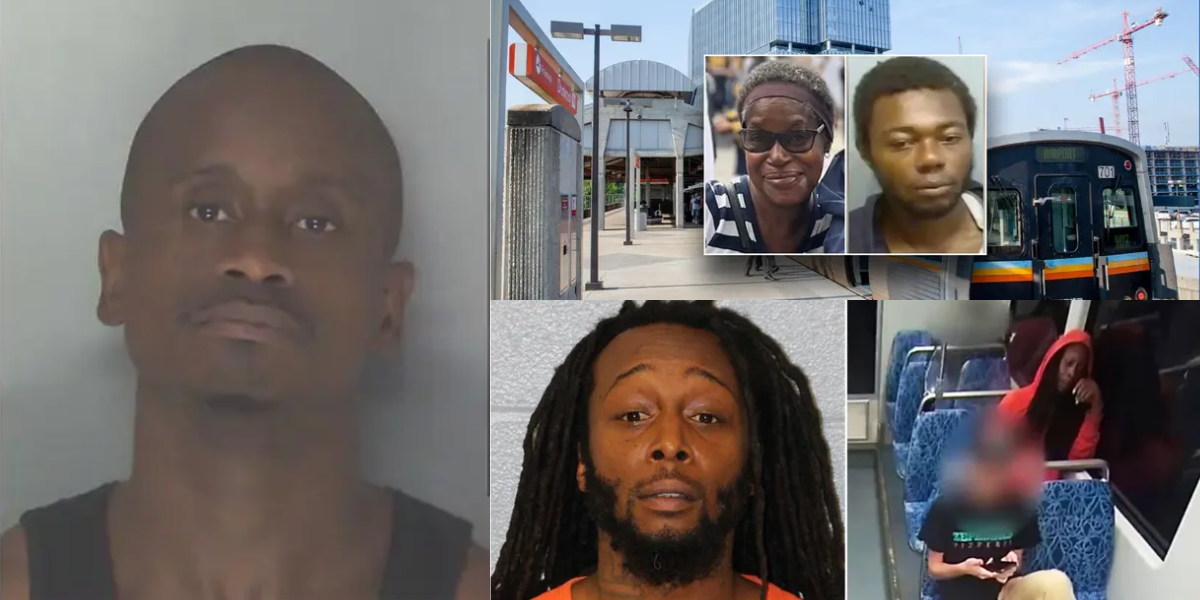
On June 5, a teenager boarded a MARTA train at Atlanta’s Midtown station and sat down for what should have been a routine ride. Instead, Anthony Tyrone Gresham, 42 — a felon with multiple prior convictions — walked up, reached into his bag, pulled out a handgun, and fired three shots directly at the boy.
The teen was struck in his hand and leg. Gresham ran before police arrived, triggering a multi-agency manhunt that stretched across county lines. Two days later, officers finally caught him in Douglasville.
He now faces federal charges including committing an act of violence on a mass transportation system, illegal possession of ammunition as a convicted felon, and discharging a firearm during a violent crime.
But the story doesn’t end there. Just days before Gresham’s attack, 66-year-old Margaret Swan — a great-grandmother — was fatally stabbed on the same MARTA system. Her accused killer, 25-year-old homeless man John Elijah Matthews, faces federal charges for the murder. Two deadly incidents on the same transit system within days of each other. Atlanta commuters are shaken.
New York City — Penn Station
‘He Looked Me Dead in the Eyes — Then Slashed My Face.’ Five Stabbed at NYC’s Busiest Hub.
Sunday evening, June 7. Thousands of commuters were rushing through Penn Station’s New Jersey Transit concourse when Hector Deleon, 51, began randomly slashing people without warning. By the time it was over, five people were bloodied — one seriously injured.
Victim Henry Obadiah described the moment Deleon targeted him: “I locked eyes with this crazy madman, and he just looked at me, and he had this rage in his eyes — and he went whack. Cracked me right in the mouth.” Obadiah only realized he’d been stabbed when someone behind him screamed, “He’s got a knife.”
Deleon had at least seven prior arrests. In 2022, he was accused of slashing a man in the neck — and received two years’ probation with a requirement for mental health treatment. He was back on the streets. And on Sunday, he used that freedom to attack five strangers.
Obadiah, speaking on national television, didn’t hold back: he called out what he described as “soft-on-crime” policies that allow career criminals to cycle through the system with minimal consequences.
Charlotte, North Carolina — Lynx Blue Line
She Fled War to Build a Life in America. A Stranger Stabbed Her From Behind on a Train.
Iryna Zarutska came to America as a refugee from Ukraine, seeking safety and a future. On August 22, 2025, the 23-year-old sat down on Charlotte’s Lynx Blue Line light rail. Decarlos Brown Jr., 35, sat behind her — and without warning, pulled out a knife and stabbed her from behind. She did not survive.
Brown had a documented history of violent crime — assaults, robberies — and had been diagnosed with schizophrenia. He was still free. Still on the streets. Still able to board a public train.
This week, a federal judge ruled Brown incompetent to stand trial following a mental evaluation. He is expected to be committed to a federal treatment facility until he is deemed competent — meaning the case against him could be delayed indefinitely.
U.S. Attorney Russ Ferguson offered this assurance: “He will be in custody that whole time. Our number one goal is justice for Iryna Zarutska and her family. That’s what’s on the top of our minds and our hearts every day.”
Brown could face the death penalty if the federal case eventually proceeds.
What This Means for Every American Commuter
Three cities. Three systems. Three attackers with violent histories the justice system already knew about. The question being asked from Atlanta to New York is no longer “how did this happen” — it’s “why do we keep letting it?”
Lawmakers and law enforcement officials are now facing pressure to create stronger tracking systems for repeat violent offenders and to close the gaps that allow individuals with known violent histories to roam freely in crowded public spaces.
Until then, millions of Americans boarding trains, buses, and light rails every day are left wondering: who is sitting behind them?